
Ask for 12 Month Healed Photos to Vet Color Realism Tattoos
Color realism tattoos aim to reproduce a subject in lifelike color and light, the way a photograph would, using layered pigment instead of flat color and heavy outlines. The style suits clients who want a striking, dimensional piece and are willing to trade that impact for more sessions, higher cost, and a longer-term commitment to sun care and touch-ups than a traditional tattoo demands.
TL;DR:
Color realism tattoos are best suited for subjects with strong contrast and a clear focal point to ensure longevity and sharpness over time.
Skilled artists use soft shading, color packing, and layering techniques, with correct needle choices, to create photorealistic effects that hold up on skin.
Proper healing and aftercare, including sun protection and gentle washing, are critical for maintaining color saturation, especially for lighter and yellowish pigments.
Expect large, detailed projects like full sleeves or back scenes to take 15 to 20 or more sessions and cost starting around $200 per hour.
Always review healed photos at least 12 months post-application and ask how the palette will react with your skin undertone before booking a color realism tattoo.
Table of Contents
What Color Realism Tattoos Are Trying to Achieve
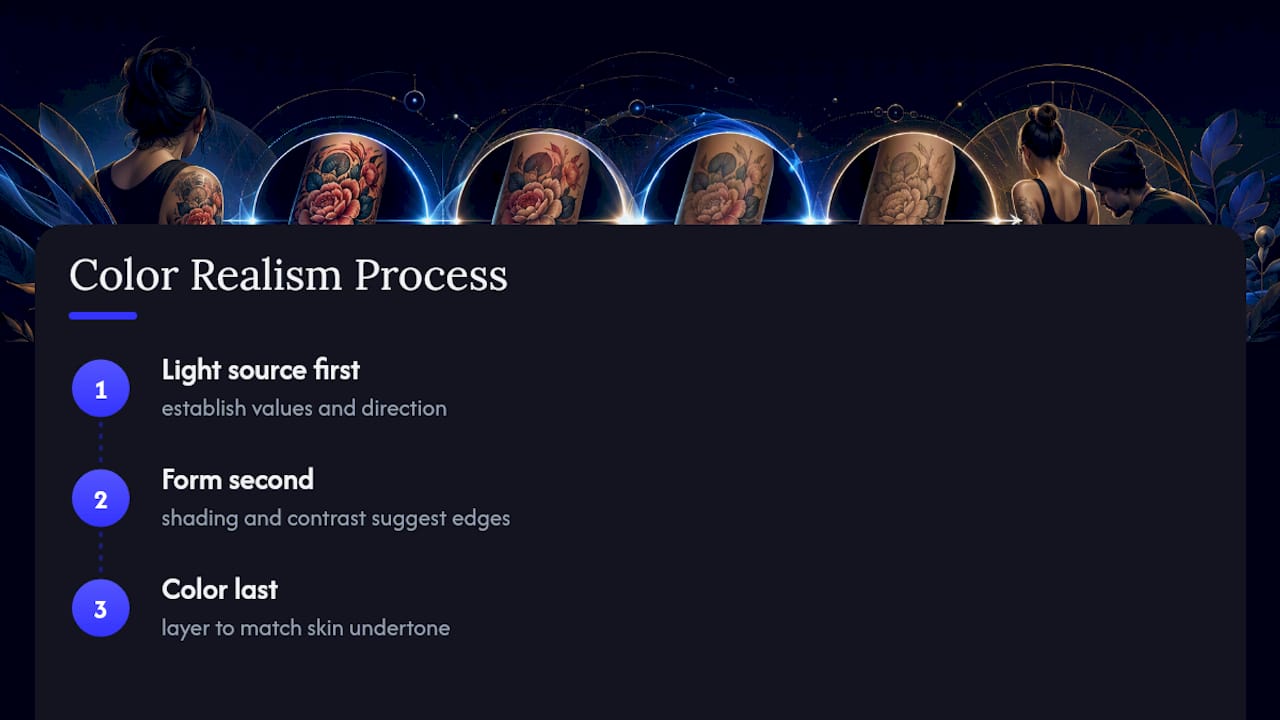
The whole style hinges on value before hue. If the darks and lights aren’t accurate, no amount of color will make an image read as real. Artists working in color realism build a piece the way a painter would: light source first, form second, color layered on top to carry the illusion the rest of the way. That’s a different discipline than a traditional or new-school tattoo, which leans on bold outlines and flat, saturated fills that read clearly from across a room.
Color realism drops the outline almost entirely. Edges get suggested through shading and contrast rather than a hard line, which is part of why the style can look photographic. The palette itself is built to match skin undertone, not just the reference photo, so a portrait or animal eye holds up on the actual body wearing it rather than looking correct only on paper.
Subjects that naturally suit this approach share one trait: strong value contrast. Portraits, animal eyes, water droplets on glass, and single flowers all have a built-in play of light and shadow that gives the artist something to work with. Flat, evenly lit subjects tend to fight the technique.
The Techniques That Separate Real Skill From a Good Sketch
Three techniques do most of the work in a color realism piece, and you can learn to spot them in a portfolio. Soft shading blends tone gradually rather than in hard bands, which is what makes skin, fur, or petals look rounded instead of cartoonish. Color packing drives saturated pigment solidly into a small, deliberate area, usually the piece’s focal point. Layering builds that saturation across multiple passes rather than jamming pigment in on day one, since skin can only accept so much ink before it starts to traumatize and blur the work.
Needle choice tracks the job. Magnum needle groupings lay down soft shading and larger color fields efficiently, while round shaders and liners carry the fine detail: eyelashes, whisker texture, the pinprick highlight in an eye. An artist who understands color realism technique also knows when to stop for the day. Overworking skin in one sitting causes excess trauma and pushes pigment retention in the wrong direction.
A few things worth asking about at a consult:
How many passes does this design need to reach full saturation?
Which needle groupings will you use for the shading versus the fine detail?
Will the piece hold up if I convert it to grayscale?
Pro Tip: Ask your artist to show you the design in black and white before color goes anywhere near it. If the value structure doesn’t work in grayscale, color won’t rescue it later.
Design Ideas That Age Well in Color
Not every idea that looks good on Instagram survives five years on skin. The subjects that hold up share a pattern: strong contrast, one clear focal point, and a limited palette.
Portraits. Human and pet faces reward the value-first approach and give an artist room to show off shading control, especially around eyes and skin texture.
A single saturated flower. One bloom in deep red or blue, rather than a full garden, keeps the “color climax” concentrated instead of spread thin across the piece.
Animal eyes. High contrast and a natural highlight point make eyes a favorite showcase subject, and they photograph well when healed.
Glass and liquid. Water droplets, whiskey in a glass, or a cracked orb create built-in light play that color realism is suited to render.
The concept behind a “color climax” matters more than most people realize going in: pick one concentrated area to carry the saturation, and keep the rest of the piece in supporting shadow and midtone. That restraint is what keeps a piece from turning muddy as pigment mellows over the years. On placement, a forearm or calf works for a single flower or eye at 4 to 6 inches; a full portrait needs closer to 8 inches minimum to hold detail, which points toward the thigh, upper arm, or chest. Full backs and sleeves are where multi-session scene work belongs, since the extra surface area gives an artist room to build contrast without cramming detail.
What Color Realism Tattoos Actually Cost
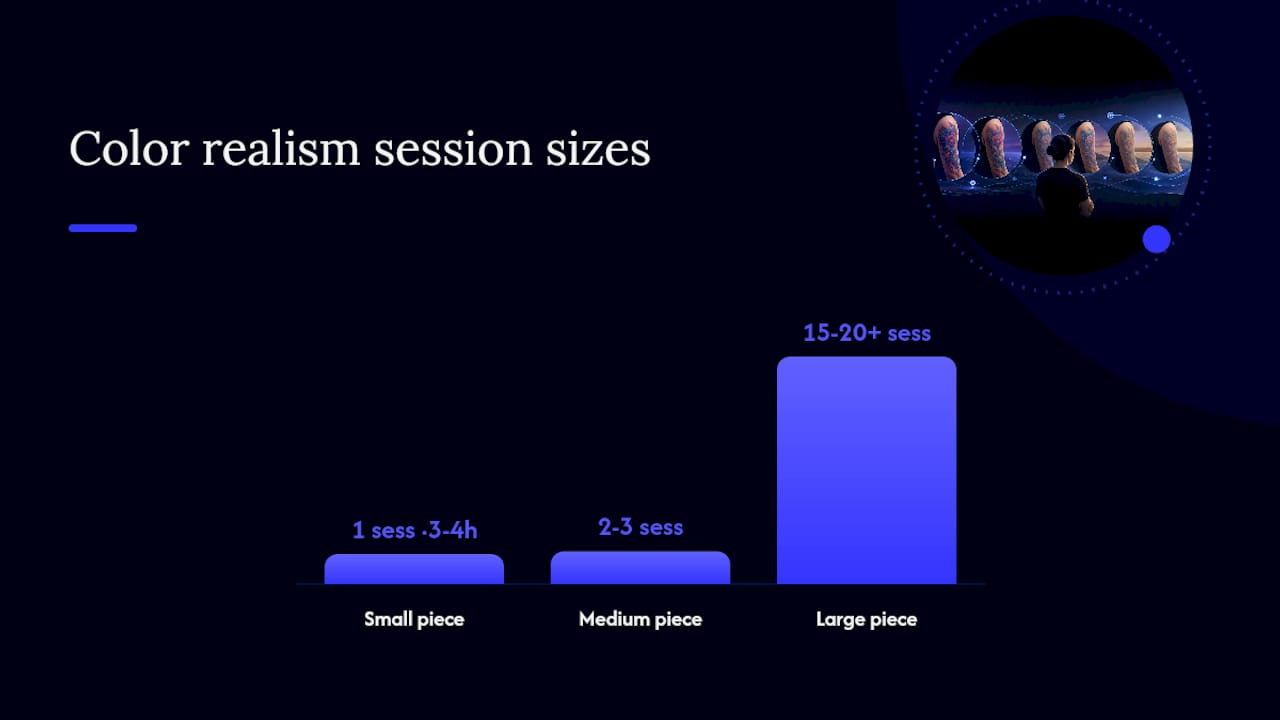
Rates for skilled color realism work typically start around $200 an hour, and climb from there based on the artist’s experience, the complexity of the reference, and how much prep the design needs before a needle ever touches skin. A hand-sized flower or an eye might land in one 3 to 4 hour sitting. A detailed portrait usually runs two to three sessions once you account for a healing gap between them. Large-scale scene work, full sleeves or backs, can stretch past 20 sessions on bigger projects.
A few numbers worth planning around:
Small piece (flower, eye): 1 session, 3 to 4 hours
Medium piece (portrait, small animal): 2 to 3 sessions
Large piece (full sleeve, back scene): 15 to 20+ sessions
Artists build in healing time between sessions, typically two to four weeks, so skin can recover before more pigment goes in. Budget for at least one touch-up down the line. Color realism, more than most styles, tends to need it.
Aftercare That Actually Protects the Color
Healing color realism the right way is what keeps it looking sharp instead of muddy five years out. Leave the initial bandage on for 24 to 48 hours, then switch to gentle washing with fragrance-free soap and a thin layer of healing balm. Full healing takes 2 to 4 weeks, and that window is where most color loss actually happens if aftercare slips.
Wash gently twice daily; pat dry, never rub.
Apply a fragrance-free moisturizer once skin starts to peel.
Skip pools, baths, and long hot showers until fully healed.
Wear broad-spectrum sunscreen on the piece every time it sees daylight, healed or not.
Not every color ages at the same rate. Deep reds, blues, and greens tend to hold their saturation far longer than pale yellows, light pinks, or white ink, which fade fastest and often need the earliest touch-up. Ongoing research into how pigments interact with skin over time backs up what artists see anecdotally: consistent sun protection is the single biggest lever you control after the tattoo heals. A broad-spectrum tinted sunscreen built for daily wear makes that habit easier to stick to.
How to Actually Vet a Color Realism Artist
Fresh, just-finished photos tell you almost nothing about whether a tattoo will look good in a year. Ask for healed photos at 12 months or later instead, and look for consistent results across different skin tones, not just one lucky piece.
At a consult, a few direct questions separate a strong technician from someone still learning:
How will this palette read against my specific undertone?
What’s the realistic session count and healing schedule for this size?
What’s your touch-up policy if a color fades faster than expected?
Soul Kraft Ink builds every piece from scratch, with no templates or repeats, which matters specifically for color realism because a palette that works on one client’s skin can look flat on another’s. Artist Jorge works extensively in color-driven realism, Angel has a portfolio built around detailed portrait and animal work, and Becky brings a strong eye for botanical and single-subject color pieces. Reviewing an artist’s own booked work, not just their favorite reference photo, is the fastest way to know if their hand matches your project.
Planning for the Long Game With Color Realism
Most people shopping for a color realism piece get seduced by a single stunning photo and skip the part where they ask what that tattoo looks like in year three. Healed photos matter more than a hundred fresh-ink close-ups, and a tight, single-color climax will always age better than a piece that tries to go full color everywhere. If you take one thing from this into your consult, make it that restraint, not ambition, is what keeps color realism looking sharp a decade out.
— Kyle
Book a Custom Color Realism Piece at Soul Kraft Ink
Soulkraftink builds every color realism piece from a blank page, so you’re never picking from a wall of flash or a design someone else already has on their arm. The studio offers hourly sessions and full-day bookings for larger scene work, along with a shop minimum for smaller pieces, giving you a clear sense of cost before you commit to a chair.
If you want to see how these techniques actually hold up, browse healed work and artist portfolios directly, then reach out through the inquiry page to start a consult. That’s where undertone, sizing, and session count get mapped out before any ink goes down.
Sources
FAQ
What Is Color Realism in Tattooing?
Color realism is a tattoo style built to look photographic, using layered color, soft shading, and minimal outlining instead of flat fills and bold black lines. The goal is accurate light and shadow first, with color added to complete the illusion, as explained in ColorWithLeo’s breakdown of the technique.
How Big Is a $2,000 Tattoo?
At a typical rate of around $200 an hour, a medium-sized piece, such as a detailed portrait or a hand-sized animal or flower, typically requires two to three sessions. The studio prices custom color realism work by session rather than by a flat quote, so exact cost depends on size and detail.
Do Color Realism Tattoos Last?
Color realism holds up well with proper care, though it usually needs at least one touch-up over the years since certain pigments fade faster than others. Deep reds, blues, and greens tend to hold saturation longer than pale yellows, pinks, or white ink, which is why a concentrated color climax ages better than an all-over saturated design.
What Is the Most Regretted Tattoo Placement?
Hands, fingers, and necks come up most often in regret discussions because they see constant sun and friction, which fades color fastest and complicates career or event situations. For color realism specifically, thin skin over joints also distorts detail over time, so most artists steer detailed portrait work toward flatter, more protected areas like the upper arm, thigh, or back.
What Should I Ask an Artist Before Booking Color Realism?
Ask to see healed photos at least 12 months old, not just fresh work, and ask how the planned palette will look against your specific skin undertone. It’s also worth asking about the expected session count and the studio’s touch-up policy, questions Soulkraftink walks through directly during its consult process.
Comments